

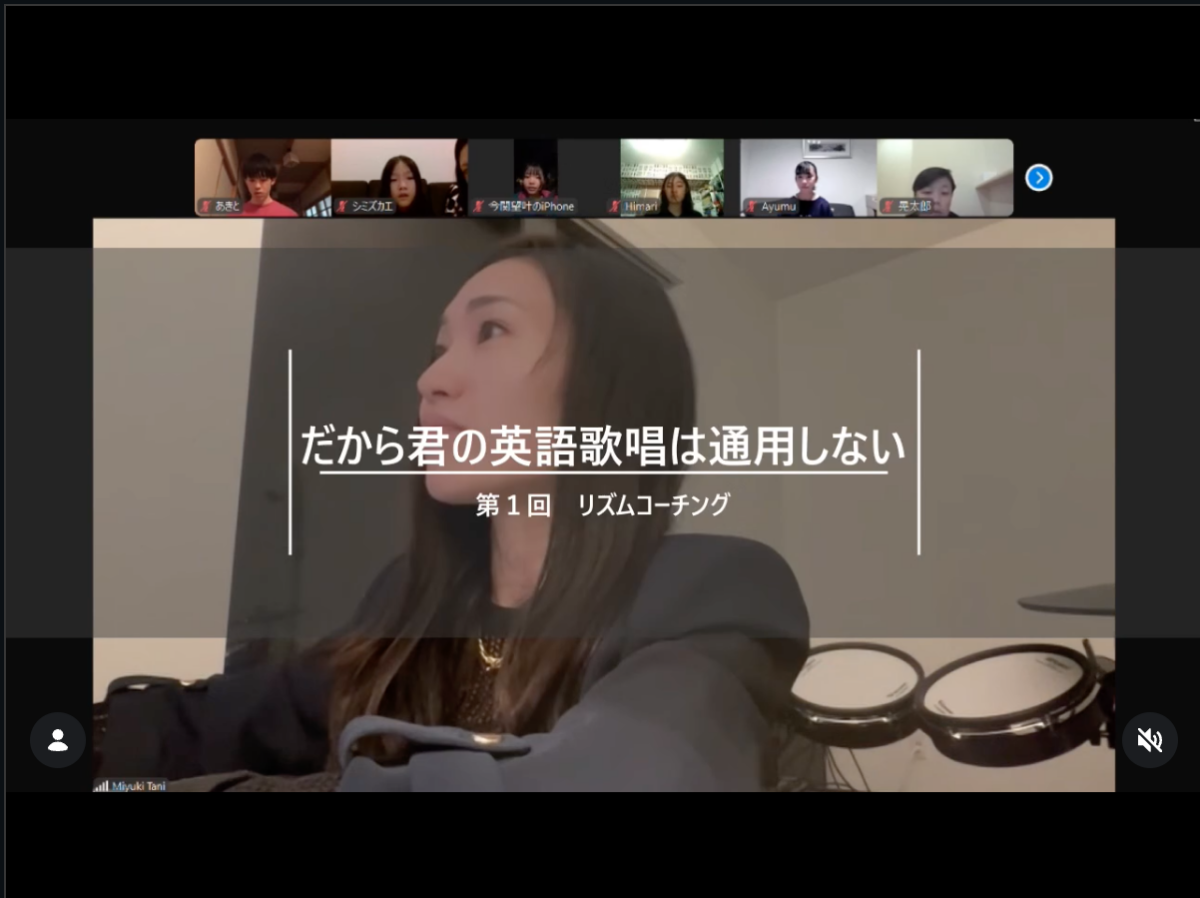
[Impact Report] Global Rhythm & Groove Workshop for Young Artists
Impact Report: Global Rhythm & Groove Workshop for Young Artists
Project: Bridge You – National Online Musical Performer Development School (Japan)
1. Executive Summary
This report summarizes the educational impact of the “Global Rhythm & Groove Workshop” delivered for Bridge You, an online musical theater school dedicated to nurturing the next generation of performers across Japan.
Led by Broadway performer Tricia Tanguy, Bridge You focuses on reducing regional disparities by providing high-level, professional training to students regardless of their location. The workshop aimed to bridge the rhythmic gap between Japanese native feel and global “Back-beat” standards, essential for any aspiring musical theater professional.
-
Format: 2 Online Intensive Sessions (Nov 10 & Dec 14, 2024)
-
Target Audience: Students (Ages 5–22) aspiring to be musical theater performers
-
Total Participants: Approximately 41 students
-
Survey Respondents: 41 participants
-
Video Resources: [ Facebook video ] ・ [Instagram recap]
2. Key Performance Indicators (KPIs) — N=41 (Ages 5–22)
Based on the post-workshop survey, the program achieved exceptional engagement and measurable success in musical theater education:
-
Knowledge Acquisition: 95% (39/41)
reported gaining new, transformative insights into global rhythmic structures (Back-beat). -
Inspiration & Aspiration: 93% (38/41)
expressed a strong desire to develop “world-class expressive power” to reach professional Broadway/Global standards. -
Content Satisfaction: Over 90% of respondents
rated the “Back-beat” and “English vs. Japanese Groove” sessions as “Highly Meaningful” for their future careers.
3. Educational Milestones Achieved
The workshop addressed the specific needs of musical theater performers in Japan:
-
Linguistic Rhythm Analysis:
Understanding how the Japanese language affects rhythmic accents and how to shift to the vowel-and-breath-driven “English Groove” required for Western musical repertoire. -
Structural Understanding:
Moving from a native “On-beat” (front-loaded) feel to the “Back-beat” (8-beat and 16-beat) structures fundamental to contemporary musical theater and jazz dance. -
Integrated Performance Skills:
Students learned to sync their rhythm across vocals, jazz/tap dance, and character storytelling.
4. Participant Testimonials (Selected from the 41 Respondents)
“I finally understood the difference between on-beat and back-beat. I will now listen for these grooves when I hear international musical scores.” — Participant (Junior Artist)
“I learned that the placement of accents is completely different between Japanese and English. I want to apply this directly to my vocal training for English songs.” — Participant (Vocal Student)
“The workshop helped me connect what I’m learning in dance with musical structure. It was incredibly helpful for my aspirations in musical theater.” — Participant (Musical Theater Aspirant)
“I want to use these rhythmic tools to improve my storytelling through song and dance—it’s about more than just hitting the notes.” — Participant (Dancer/Singer)
5. Conclusion & Future Outlook
The feedback from these 41 young performers at Bridge You confirms a massive demand for specialized rhythmic education in the Japanese musical theater world. By providing access to global-standard training online, we are equipping young talents from all over Japan with the tools to compete on the world stage.
There is a clear “Demand Signal” for continued mastery of the “Global Groove.” Moving forward, I am dedicated to serving as a “Rhythmic Bridge,” ensuring the next generation of Japanese musical theater artists can shine with authentic, global-standard expression.
Appendix: Survey Data Overview
Total Respondents: 41 (Ages 5–22)
Learning Impact on Global Music: Average Score 4.8 / 5
Desire for Global Expression: Average Score 4.7 / 5
Effectiveness of “English Groove/Back-beat” Session: 95% Positive
Effectiveness of “Rhythmic Differences” Session: 98% Positive
- [SOUND WELLNESS] Why the Right Sound Changes Everything
- Polyrhythm Heals — The Science Behind Music That Calms the Mind and Sharpens ...